


Cars & Bids
4.223.00 Reviews
App Specs
- Version
- 26.7.2
- Updated On
- License
- Free
- Downloads
- 10,000+
- Developer
- Cars & Bids, LLC
- Categories
- Auto & Vehicles
- Platform
- Android
Screenshots

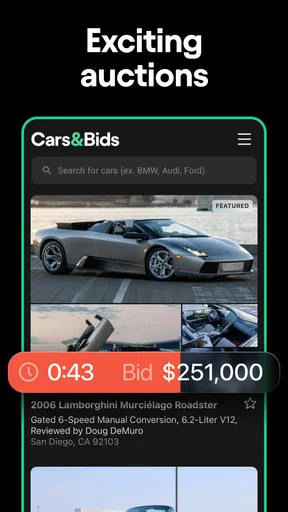
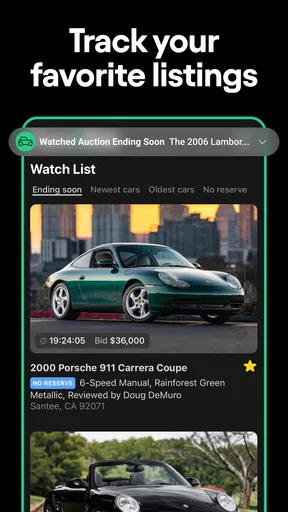
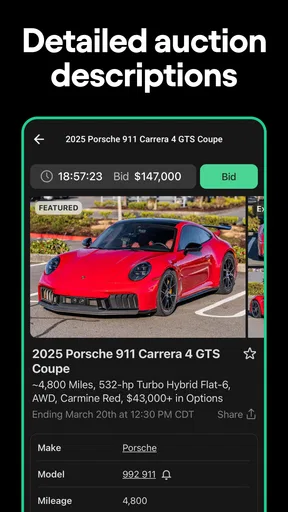
 Analysis by AppCompare
Buying a used enthusiast car is usually a research project before it is a purchase. I may spend an evening comparing listings, checking photos, reading descriptions, and trying to decide whether a vehicle is genuinely interesting or simply presented well. Cars & Bids is built around making that search feel more like a focused auction experience than a general classified-ad hunt. It is a free Auto & Vehicles app from Cars & Bids, LLC, aimed at people who care about distinctive cars and want to follow competitive listings in one place.
My main reason to use it is not just convenience. The important capability is the way it brings enthusiast-oriented auctions into a dedicated marketplace. That changes how I browse: instead of treating every used car as interchangeable, I can concentrate on vehicles where history, condition, originality, modifications, and community attention matter. The app has a 4.2 average from around 70 ratings, with over 10 thousand installs, which gives it a modest but meaningful footprint for a specialized automotive service.
I would not describe it as a universal replacement for every way of shopping for a car. Someone looking for the cheapest commuter, a nearby dealer, or a simple private-sale listing may be better served elsewhere. But if the appeal of a car includes its era, specification, driving character, or enthusiast following, this app has a much clearer purpose than a broad marketplace.
Why the auction marketplace is the real feature
The central idea is specialization. A normal classifieds app tends to organize vehicles around make, model, price, mileage, and distance. Those filters are useful, but they do not always capture why an enthusiast car is desirable. Two cars with similar mileage can have completely different appeal because one has a rare configuration, a carefully documented ownership story, or tasteful changes that the other lacks.
Cars & Bids puts the auction itself at the center of the experience. That matters because an auction listing is not merely a static advertisement. It is a point of attention where the vehicle’s details, presentation, and perceived value are examined by people who may notice things a casual buyer would miss. For me, that makes browsing more educational. Even when I am not ready to bid, I can learn which details influence interest and which questions deserve attention.
The app’s store summary presents it as an automotive auction marketplace for car enthusiasts, and that description is more useful than a generic promise to help people find vehicles. Its identity is narrow enough to be understandable. I open it expecting enthusiast listings and auction activity, not a complete inventory of every practical hatchback, work van, or inexpensive family sedan.
That focus also affects the emotional side of the experience. A regular search can feel like scrolling through an endless supply of similar cars. An enthusiast auction feels more deliberate. A particular vehicle becomes an event to follow, inspect, and evaluate. The strongest benefit is concentration: the app helps turn scattered car curiosity into a structured search habit.
Worth Reading Before You Choose

EA SPORTS FC Mobile 26 Is a Bigger Football Game, but It Takes Time

Flipboard Shows What News Apps Must Do Beyond the Feed

Switching to Android Auto Means Rethinking Your Driving Routine

Google Calendar Makes a Crowded Week Easier to Manage

Ludo King Makes the Most of the Minutes Between Plans

Baby Panda World Brings Quick Play to Modern Phones, but Its Game Library Feels Busy
What I look for before taking a listing seriously
I do not treat an attractive photo set as proof that a car is a good buy. With an auction marketplace, I first slow down and look for the information that can change the decision: the exact configuration, visible wear, signs of previous repairs, modifications, maintenance clues, and whether the presentation answers obvious questions. This is where the app is most valuable as a research tool rather than a simple shopping window.
My practical tip is to create a short checklist before becoming emotionally attached to a listing. I note what would make the car special, what would make it expensive to put right, and what I would need to verify independently. For an older performance car, that might mean separating desirable factory equipment from aftermarket work. For a newer enthusiast model, it might mean checking whether the mileage and condition justify attention compared with a conventional local listing.
This approach prevents a common auction mistake: bidding because the car feels rare or exciting before deciding whether it fits my budget, storage, insurance, and maintenance reality. The app can help me discover the right vehicle, but it cannot remove the responsibilities that come with owning one.
How using it in practice changes the buying workflow
My preferred workflow begins with browsing rather than bidding. I use the marketplace to narrow my interests, then study a listing as if I were preparing to inspect the car in person. I pay attention to the balance between the headline appeal and the less glamorous details. A desirable model can still be a poor purchase if its condition, history, or modifications do not suit me.
The auction format encourages a different rhythm from ordinary classifieds. Instead of sending a quick message and arranging a viewing immediately, I spend more time building an opinion from the listing. That is helpful when I am comparing several enthusiast cars, because I can evaluate them using the same questions instead of reacting to whichever one appears first.
One of my favorite uses is keeping a watchlist of possible directions rather than one dream car. I might compare a clean, mostly original example with a modified car that appears more exciting. I might also compare a well-presented vehicle at auction with a similar model advertised through a dealer. This reveals an important trade-off: the most interesting listing is not automatically the most sensible ownership choice.
I also recommend using the app before a purchase decision, even if the eventual transaction happens through another route. The listings can sharpen my understanding of what enthusiasts consider important. That helps me ask better questions when viewing a car privately. It also gives me a reference point for presentation and condition, although I would never treat an auction result as a guaranteed value for every similar vehicle.
A realistic evening with the app
Imagine I am looking for a weekend car while keeping my daily vehicle. I open the app after work and find a listing that matches the type of driving I enjoy. The first temptation is to focus on the shape, color, and performance reputation. Instead, I read through the listing carefully and write down questions: Is the specification genuinely desirable to me? Are the modifications compatible with how I plan to use it? Would I be comfortable maintaining it if a specialist were required?
Next, I compare that car with another listing that may be less dramatic but easier to understand. The first might offer more character, while the second might have a clearer path to ownership. I then set a personal maximum that includes more than the bid itself. Transport, inspection, registration, insurance, immediate maintenance, and storage can all affect the real cost of an enthusiast purchase.
That last step is where the app’s excitement needs to be balanced with discipline. An auction interface can make a decision feel urgent, but my ownership plan should remain calm. If the numbers stop making sense, I leave the listing alone. Cars & Bids is useful in this scenario because it gives me a focused place to discover and compare cars, not because it makes every purchase automatically safe.
Questions I would answer before bidding
I would want to know whether the car suits my intended use, not merely whether it is attractive. A vehicle that is excellent for weekend drives may be frustrating as a daily commuter. I would also consider whether parts, servicing, and qualified repair work are realistically available near me. Enthusiast appeal can increase ownership satisfaction, but it can also make mistakes more expensive.
I would ask whether the listing gives me enough confidence to proceed to the next step. If important details remain unclear, I would seek clarification or arrange an inspection rather than assuming the best. The app can organize the opportunity, but my responsibility is to verify the vehicle itself and understand the transaction before committing.
I would also ask whether auction competition matches my personality. Some buyers enjoy watching interest build and making a firm decision under a deadline. Others prefer negotiating privately, taking several days, and walking away without feeling that they lost a contest. The better option depends on how I make decisions, not simply on which marketplace has the more appealing cars.
Where the focused approach helps most
The best scenario for this app is a buyer who already knows that ordinary transportation is not the whole goal. I may be searching for a modern classic, a performance-oriented model, an unusual specification, or a car with a story that makes it more memorable than a routine used vehicle. In that situation, the specialized audience and auction format feel relevant rather than distracting.
It is also useful for people who are still learning the enthusiast market. I do not need to be an expert to browse, but I do need curiosity and patience. By comparing listings, I can start to notice how condition, originality, equipment, and presentation influence desirability. That learning process is more valuable than simply sorting by the lowest price.
Owners can benefit too. Someone preparing to sell an enthusiast car may use the marketplace to understand how comparable vehicles are presented. The key lesson is that a good listing has to communicate more than a model name. Buyers want a coherent explanation of the car, its condition, and the reasons it deserves attention. Even without selling, I find that studying strong listings improves the way I evaluate cars elsewhere.
The app is less convincing for a person who needs a vehicle immediately and locally. If I need a dependable commuter by the end of the week, a nearby dealer or broad classifieds service may offer more practical choice and faster comparison. The same is true if my priorities are warranty coverage, financing convenience, or a straightforward return process. A specialist auction marketplace is not designed to eliminate every part of the buying process.
Three useful habits that make the app more valuable
- Separate discovery from decision. I allow myself to enjoy browsing, then return later to judge the listing against a written budget and ownership plan. This keeps enthusiasm from becoming an accidental bidding strategy.
- Compare character with risk. When a modified or unusual car attracts me, I compare its appeal with the cost and complexity those changes may introduce. A distinctive car can be rewarding, but originality and simplicity may be worth more to my situation.
- Use listings as research material. Even when I do not buy, I study how similar vehicles are described and what details receive attention. That gives me better questions for private sellers, dealers, and inspections.
These habits are not flashy features, but they are where I get the most practical value. The app becomes more than a stream of tempting cars; it becomes a way to improve my judgment. That is especially important because enthusiast purchases are often emotional, and a well-organized process gives emotion a useful place without letting it control the outcome.
The trade-offs behind the auction experience
The same focus that makes the app appealing can also limit it. A specialized marketplace may have fewer relevant choices for someone with a very specific budget, location, body style, or ownership requirement. I may find an exciting car but not the exact practical combination I need. In that case, a larger classifieds platform can be better simply because it covers more ordinary inventory.
Auctions also require confidence in my own stopping point. I cannot rely on a long negotiation to gradually reveal whether the deal feels right. I need to decide what the car is worth to me before the excitement of competition changes that number. This is not a flaw unique to the app, but it is a genuine part of using an auction marketplace and should be taken seriously.
Another trade-off is that enthusiast presentation can influence perception. Attractive photography, a compelling description, and a desirable specification can make a car feel more exceptional than its mechanical condition justifies. I treat presentation as an invitation to investigate, not as a substitute for inspection. That distinction is one of the most important lessons I take from using the service.
There is also a difference between discovering a car and owning it. The app can help me identify a vehicle that fits my interests, but it does not turn maintenance, transport, insurance, storage, or repair planning into minor details. If I am not prepared for those responsibilities, the sensible choice may be to keep researching rather than bid. For me, the best use of the app is informed enthusiasm, not impulse buying.
How it compares with familiar alternatives
Compared with a general classifieds app, Cars & Bids feels more curated around enthusiast interest. A broad service is usually better when I want maximum volume, local convenience, or a basic transportation search. This app is better when I want the marketplace itself to reflect the fact that the car’s identity matters.
Compared with dealer shopping, the experience is less about a standardized retail process and more about evaluating a particular vehicle. A dealer may be preferable when I value a familiar point of contact, financing options, warranty arrangements, or a more conventional buying path. The auction marketplace appeals more when I am willing to do additional homework in exchange for access to distinctive cars.
Compared with private-sale browsing, the app offers a more concentrated enthusiast setting. Private listings can sometimes provide flexibility and direct conversation, but they may vary widely in detail and presentation. The dedicated auction environment gives me a clearer place to compare enthusiast vehicles, while still requiring the same caution I would use with any used-car purchase.
Who gets the most from Cars & Bids
I would recommend it to a patient enthusiast who enjoys research and can walk away. That person does not need to know every technical detail, but should be willing to examine a listing carefully, ask sensible questions, and calculate the complete ownership cost. The app is particularly well suited to someone who wants a car with personality rather than simply the newest or cheapest option.
It is also a good fit for a buyer who wants to improve their market awareness before purchasing. Browsing without bidding can still be productive. I can learn what kinds of vehicles attract attention, compare how condition is communicated, and build a more realistic idea of what matters to me. That makes the app useful even when my purchase is months away.
I would suggest skipping it, or using it only as a secondary research tool, if I need a predictable daily vehicle immediately. I would also look elsewhere first if my priorities are a large local inventory, simple financing, a warranty-led purchase, or the lowest possible ownership risk. The app’s specialized character is its strength, but it is not the right answer to every automotive problem.
The application is free and rated for Everyone, so there is little barrier to trying it as a browsing resource. It runs on OS version 10 or later, and its current version is 26.7.2. Cars & Bids was released on Jun 1, 2026, and the relatively focused audience is reflected in its early scale rather than a mass-market presence. I see that as context: this is a specialist destination, not a universal shopping utility.
After spending time with it, my opinion is positive but specific. I like the way the auction marketplace gives enthusiast cars a clearer setting and encourages closer reading than ordinary scrolling. I also appreciate that it can teach me how to evaluate a vehicle, not just where to find one. Still, I would only use it with a firm budget, independent judgment, and a willingness to leave an attractive listing behind.
For a friend who talks about cars as future projects, weekend escapes, or long-term passions, I would recommend giving it a look. For a friend who simply needs reliable transportation with minimal uncertainty, I would point toward a broader and more conventional option. Cars & Bids works best when the search for the car is part of the enjoyment, but the decision to buy remains practical.
Pros
- Focused marketplace for enthusiast and collectible cars
- Detailed listings include photos
- descriptions
- and auction history
- Community comments can reveal useful vehicle information
- Auction format may create strong exposure for sellers
- Bidding activity and results help gauge market demand
Cons
- Inventory can be limited for buyers seeking ordinary daily drivers
- Winning bids may exceed expectations during competitive auctions
- Buyers must arrange inspections and shipping independently
- Vehicle condition still depends on seller-provided information
- Auction deadlines can pressure users into quick decisions
FAQs for Cars & Bids
What is Cars & Bids?
Cars & Bids is an online auction platform focused on enthusiast vehicles, particularly modern and collectible cars from the 1980s to the present. Listings commonly include performance models, unusual trims, well-kept daily drivers, and enthusiast-owned vehicles. Each auction normally includes photographs, specifications, seller details, a bidding period, and a comment section where potential buyers can ask questions before placing an offer.
Can I buy a car through Cars & Bids from outside the United States?
International participation may be possible, but buyers should confirm the current rules before bidding because registration, payment, shipping, importation, and documentation requirements can vary. A winning bidder is generally responsible for arranging transportation and handling applicable taxes, customs charges, registration, and compliance requirements. Before bidding, verify that the vehicle can legally be imported and registered in your country.
What fees should buyers expect when using Cars & Bids?
Cars & Bids may charge a buyer’s fee in addition to the winning auction price, and the exact amount or structure can depend on the platform’s current terms. Buyers should also budget for sales tax, registration, insurance, transportation, inspection, financing costs, and possible repairs. Always review the auction page and official fee information carefully before submitting a bid, since a winning bid is a serious purchase commitment.
How can I determine whether a Cars & Bids listing is trustworthy?
The platform provides listing information, photographs, descriptions, vehicle history details, and community comments, but buyers should still perform their own due diligence. Read the entire listing, examine every image, check service records and title information, review the inspection or history report when available, and ask specific questions publicly. For an expensive purchase, arranging an independent pre-purchase inspection is strongly recommended before bidding.
Are Cars & Bids bids binding, and what happens if I win?
Bids should be treated as binding commitments rather than casual offers. If you win an auction, you are typically expected to complete the purchase according to the platform’s terms and communicate with the seller promptly about payment, paperwork, pickup, and delivery. Do not bid until financing, transportation, insurance, and inspection concerns have been addressed. Review the current user agreement because cancellation policies and buyer responsibilities may change.


